The Truth About Website Funnels
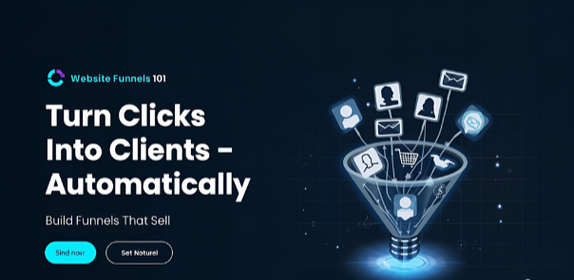
Most business websites today are like digital billboards — they look good but do nothing. A true website funnel is different. It’s not just a site; it’s a system that guides visitors step-by-step toward a sale, automatically.
“A funnel isn’t a feature — it’s a strategy that turns attention into revenue.”
What Exactly Is a Website Funnel?
A website funnel is a structured journey that leads a visitor from discovery to decision. It’s designed intentionally — every page, every button, every message — to move users closer to becoming paying clients.
- Awareness Stage – where visitors discover your offer (blogs, ads, or social posts).
- Consideration Stage – where they learn more and compare (landing pages, case studies, testimonials).
- Conversion Stage – where they take action (purchase, sign up, or book a call).
Why Most Websites Don’t Convert
The average business website has no funnel. It throws information everywhere and hopes visitors figure it out. In reality, people don’t have time to “figure it out.” You have to guide them — clearly and confidently.
- No Defined Path: Visitors don’t know what to do next.
- Weak Call to Action: Buttons like “Learn More” or “Contact Us” don’t inspire action.
- Generic Messaging: Talking about your brand, not your customer’s problem.
- No Lead Capture: Without forms or offers, you can’t nurture interested visitors.
How to Build a Website Funnel That Sells Automatically
A powerful funnel doesn’t just “exist” — it’s built with precision. Follow these five steps to transform your website into a 24/7 sales engine.
Step 1: Start with a Clear Offer
Every funnel begins with clarity. What’s your main offer? Whether it’s a service, product, or consultation, define what users gain and why they should care. A confused offer kills conversions faster than anything else.
“If you confuse them, you lose them.”
Step 2: Create a High-Converting Landing Page
Your landing page is the heart of your funnel. It must: Present one clear promise Include social proof (testimonials, logos, results) End with a strong call-to-action (“Book a Free Demo,” “Start Now”) Avoid clutter. Focus on one conversion goal per page.
Step 3: Add Lead Capture and Automation
Never let visitors leave without leaving something behind — their email, name, or intent. Offer value in exchange, like a free guide, webinar, or discount. Connect it to an email automation system that nurtures leads with helpful, personalized content.
Step 4: Use Thank-You Pages Strategically
After a visitor opts in, don’t stop there. Use your thank-you page to move them deeper into your funnel — schedule a consultation, share a testimonial video, or cross-sell another product. Every click should lead to the next logical step.
Step 5: Track, Test, and Tweak
Funnels thrive on data. Monitor how many people click, sign up, or buy. Use A/B testing for headlines, CTAs, and offers. Small changes can multiply your conversions without extra traffic.
The Automation Advantage
The beauty of a funnel is automation. Once built, it runs on autopilot — capturing leads, sending emails, scheduling calls, and nurturing clients — while you focus on your business. It’s like having a silent salesperson that never sleeps.
“Automation doesn’t replace human connection; it scales it.”
Common Mistakes to Avoid
Even great funnels can fail if they skip fundamentals. Avoid these traps:
- Selling before educating — people buy when they trust you.
- Overcomplicating steps — every extra click loses potential customers.
- Ignoring follow-up — 80% of sales happen after 5+ interactions.
- Forgetting mobile users — a funnel that doesn’t load on phones is a dead end.
The Funnel Formula for 2025
In 2025, winning funnels combine human psychology, clear storytelling, and data automation. They attract ideal audiences, nurture relationships, and convert quietly — without relying on constant ads or manual sales calls.
“Your funnel is not a page. It’s an experience that moves people emotionally and logically to say yes.”
Final Thoughts
The difference between a website that just exists and one that sells automatically is strategy. When your funnel aligns message, design, and automation, every click counts — and every visitor becomes a potential client. Build intentionally, test relentlessly, and let your funnel do the selling for you.
Filed Under